
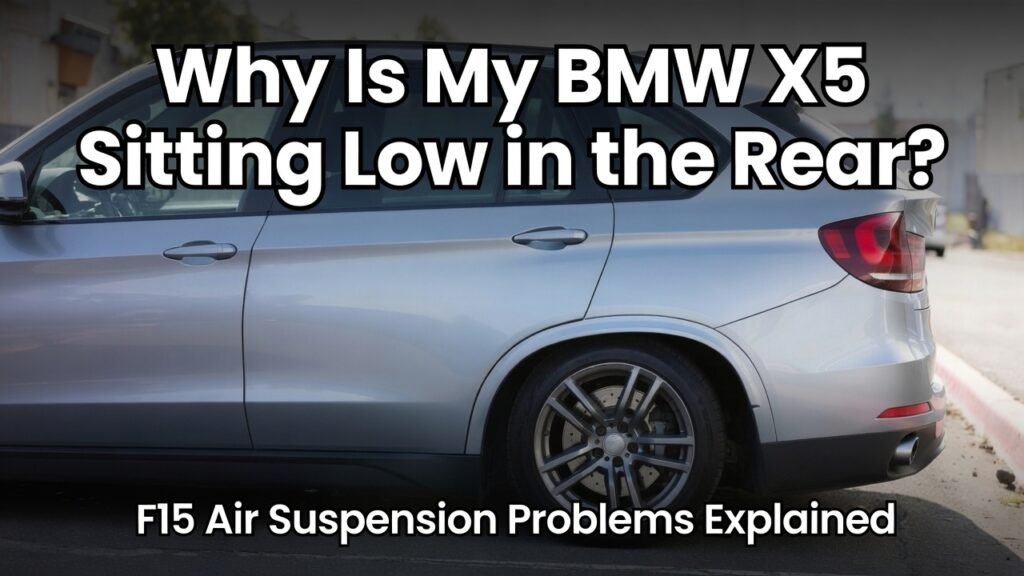
If your BMW X5 lower at the back than the front — especially after sitting overnight or for several hours — you’re not alone. At S-Line Autoworks in Long Island City, Queens, we have many customers with the same issue, “BMW X5 sitting low in the rear”, particularly after being parked overnight, on third-generation F15 (2013-2018) BMW X5 models.
The rear air suspension is supposed to keep the back of the vehicle level and comfortable. It uses rubber air bags (instead of regular metal springs) that fill with air to support the weight and adjust the height. When the system can’t hold air properly, the rear slowly drops.
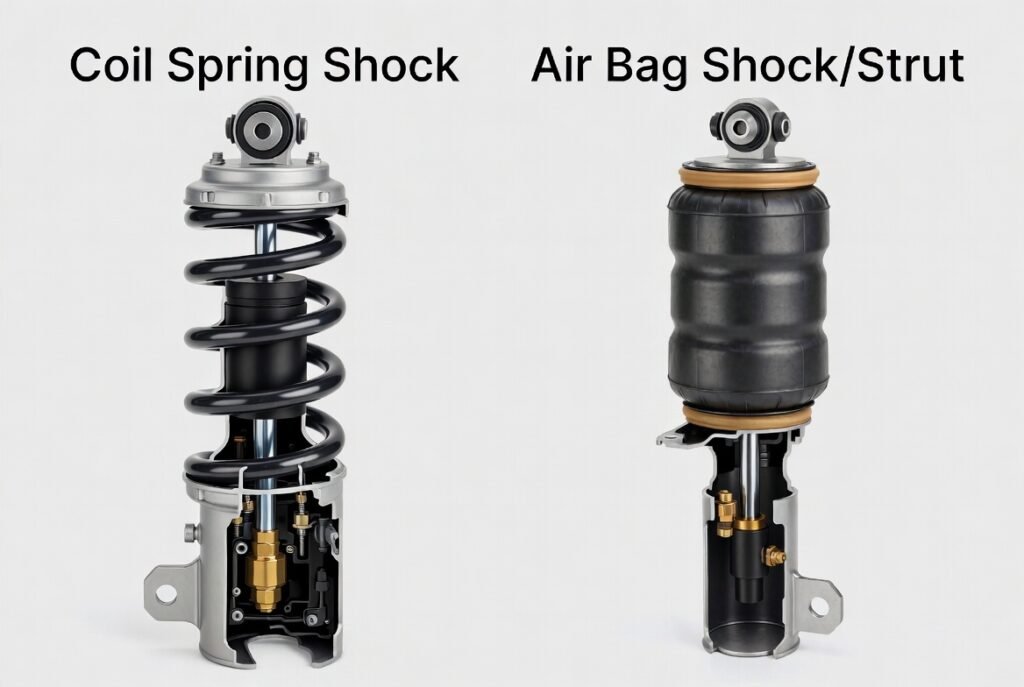
What Causes a BMW X5 to Sit Low in the Rear?
On F15 X5s, the rear air suspension is a wear item. The rubber air bags develop small cracks or leaks over time from age, mileage, road conditions, or exposure to salt and debris.
Other parts that can contribute include the air compressor (the pump that refills the system), the lines that carry the air, the valve block, or the sensors that tell the car how high it should sit.
The problem often starts intermittently — the rear drops after long periods of sitting but rises again when you start the car — before becoming permanent.
Common Signs of Rear Air Suspension Trouble
- Rear of the car sits noticeably lower than the front when parked
- The back end may raise temporarily after starting the engine but drops again later
- Bouncy or unsettled ride in the rear
- Possible dashboard messages about chassis or suspension functions
- Uneven tire wear over time
Here’s a clear example of what this sagging looks like on an X5:

How the System Works
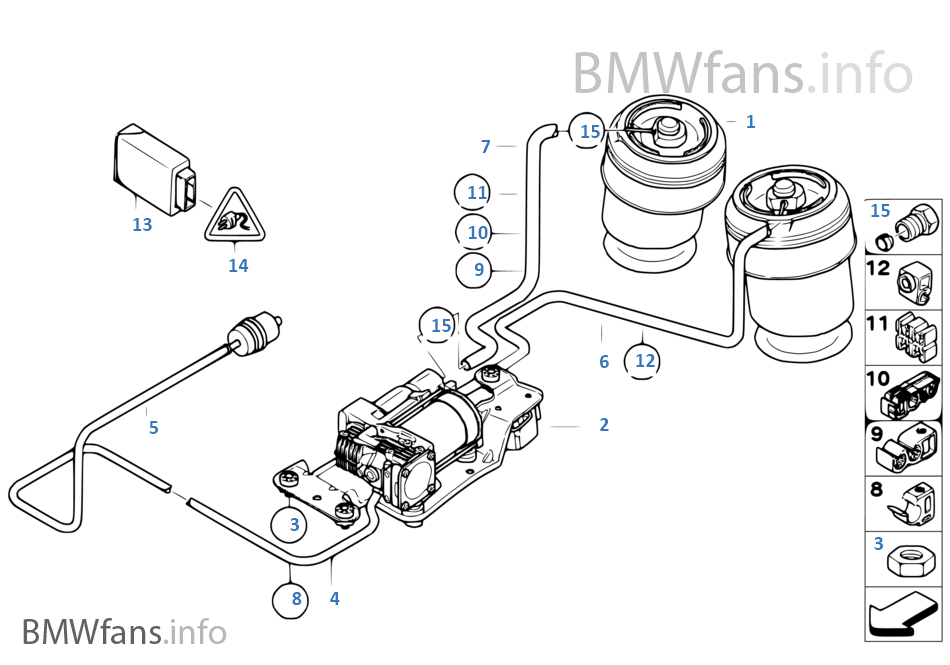
The rear air suspension isn’t overly complicated. A small compressor pumps air into the rubber bags at the back. Sensors monitor the height, and the system adds or releases air to keep everything level — even when the car is loaded or towing.
When a leak develops, the compressor works harder but eventually can’t keep up. That’s when you notice the rear sitting low.
Here is a simplified view of the main rear air suspension components:
Why Professional Diagnosis Is Essential
It’s tempting to just replace the air bags because they’re the most visible wear part. However, without proper testing you might replace the bags and still have the same problem — or end up replacing the compressor, valves, and sensors one by one.
European car specialists use BMW-specific diagnostic tools that can:
- Read live data from the suspension computer
- Test compressor output and pressure directly
- Check individual sensor readings
- Help pinpoint leaks or faults in specific components
This targeted approach identifies the exact failed part instead of guessing.
Shops without the right experience or equipment for European vehicles often replace parts randomly in the air suspension, hoping one of them solves the issue. That approach wastes money and time.
Why You Shouldn’t Wait — Get It Checked Soon
A sagging rear puts extra stress on tires, other suspension parts, and can affect handling. The sooner you address it, the simpler and more affordable the repair usually is.
It is best to have your BMW professionally diagnosed and tested. Professionally European repair shops have the tools to individually test each component and narrow down to the component that failed. A shop that doesn’t know how to diagnose and fix BMWs will replace random parts in the air suspension hoping they can change the part that is causing the problem.
If your (2013-2018) F15 X5 (or any European vehicle) is sitting low in the rear, you’re welcome to reach out to S-Line Autoworks, European car repair experts in Long Island City, Queens. Our team has the specialized tools and experience to diagnose the issue accurately and get your X5 riding level and smooth again.

